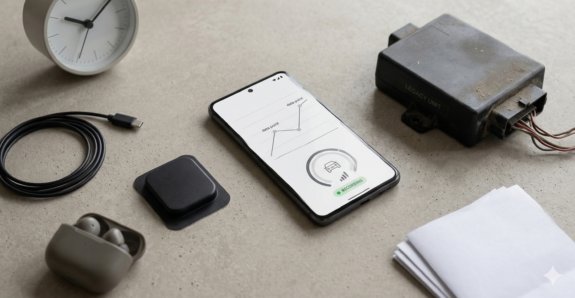
The End of the Black Box? The Rise of App Based Telematics
For many years the concept of telematics, insurance that prices premiums based on how a vehicle is actually driven was synonymous with a physical black…


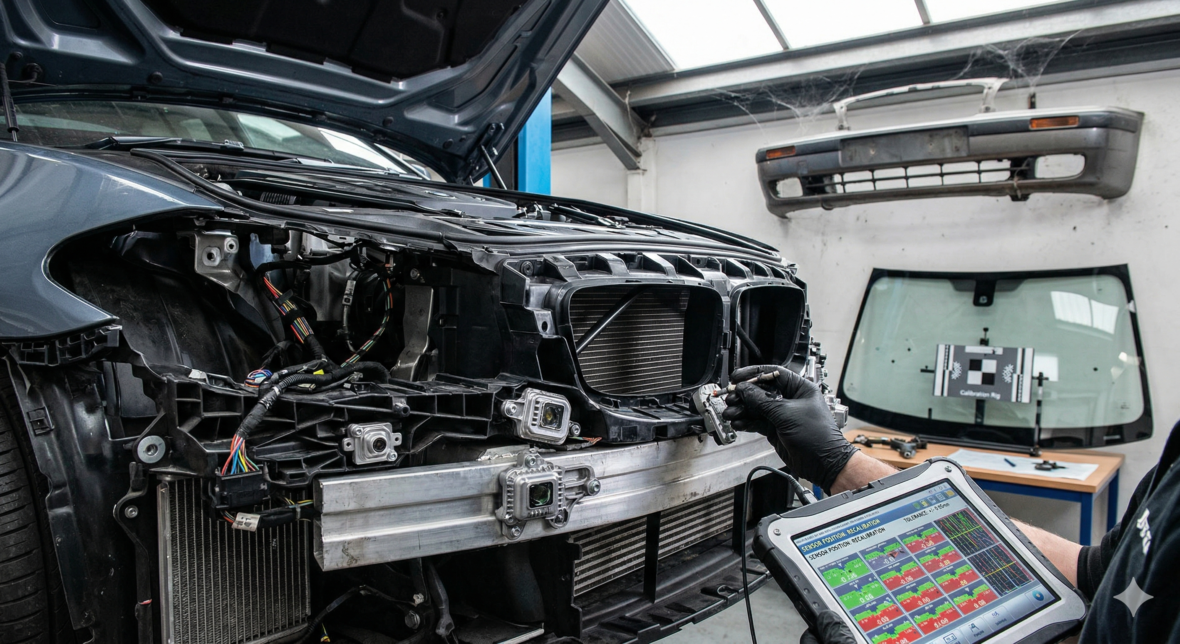
There was a time, not so long ago, when a “fender bender” was exactly that, a minor inconvenience involving a bit of dented metal and a trip to a local body shop for a quick hammer-out and a respray. You might have even settled the matter with the other driver in cash to avoid involving your insurance company and losing your hard earned No Claims Discount.
However, if you drive a car built within the last five to seven years, that era of simple repairs is officially over. Today, your car is essentially a high-powered computer on wheels, wrapped in a “Sensor Sandwich.” While modern safety technology is undeniably saving lives, it is also quietly revolutionising the way insurance premiums are calculated and why even the smallest ding in a supermarket car park can now result in a repair bill that feels like a misprint.
Most modern vehicles are now equipped with Advanced Driver Assistance Systems (ADAS). This includes everything from autonomous emergency braking and lane-keeping assistance to adaptive cruise control and blind-spot monitoring. These systems rely on a complex network of cameras, radar sensors, and ultrasonic probes hidden behind your bumpers, inside your wing mirrors, and tucked behind your rearview mirror.
These features are fantastic for safety. They catch the mistakes we make when we’re tired or distracted. But from an insurance perspective, they have moved the “risk” from the driver to the hardware. In the past, a bumper was a sacrificial piece of plastic designed to take a hit. Today, a bumper is a housing unit for thousands of pounds worth of delicate electronics.
The hidden cost isn’t just the price of the plastic or a new sensor; it’s the labour involved in recalibration.
If a sensor is moved by even a fraction of a millimetre during a minor bump, it can “see” the road incorrectly. If your lane keeping camera is slightly out of alignment, the car might steer you into a hedge instead of away from a central reservation. To fix this, technicians can’t just bolt a new part on; they must use specialist diagnostic software to recalibrate the entire system.
In many cases, this requires a clean, level environment and specific aiming targets that some local independent garages simply don’t have. This forces cars back to main dealers or specialised hubs, driving up the cost of claims. When a £200 bumper scuff turns into a £1,500 technical overhaul, insurance companies have no choice but to adjust their premiums to account for that smart technology.
Consider the humble windscreen. It used to be a simple sheet of glass. Now, it is a mounting platform for the “eye” of the car, the forward-facing cameras that control your braking and speed.
A stone chip that cracks the glass often necessitates a full windscreen replacement. Because that camera is attached to the glass, a replacement now requires a dynamic or static recalibration. This is why many drivers are seeing their “Glass Cover” excess rise or finding that their premium increases even after a glass only claim. The tech has made the glass more vital, more complex and significantly more expensive to replace.
Insurers are no longer just looking at your age and your postcode; they are looking at the “Repairability Score” of your specific car model. Two cars might cost the same to buy, but if one has sensors that are integrated into the headlights (which cost £2,000 to replace) while the other has them in a more protected area, the first car will almost certainly be more expensive to insure.
As technology moves faster than the traditional insurance models, different providers are reacting in different ways. Some insurers are “tech-positive,” offering discounts for certain safety features because they believe those features prevent accidents. Others are cost-averse, raising prices because they are worried about the high cost of repairs.
This creates a massive price gap in the market. The only way to ensure you aren’t being penalized for having a safe, modern car is to use a comparison service. By checking multiple providers, you can find the ones that accurately value your car’s safety tech without overcharging you for the “smart” sensors hidden under the skin.
Is your current insurer charging you a “tech tax”? It only takes a few minutes to find out if there’s a provider who values your car’s safety features as much as you do.
More Articles
For many years the concept of telematics, insurance that prices premiums based on how a vehicle is actually driven was synonymous with a physical black…

In the world of household finances, bundling is often sold as the ultimate shortcut to savings. From broadband and TV packages to energy bills, the…
There was a time, not so long ago, when a "fender bender" was exactly that, a minor inconvenience involving a bit of dented metal and…
About This Page
Our articles, guides & reviews are provided as generic information only. Any expressed view, product or service mentioned within these does not constitute as financial advice or recommendation by us.
Be mindful that information may have changed since publication
Compare Personalised Insurance Quotes In Minutes
Compare Now